
-
Podcast Episode: Happiness, Stress, And relationships

Dr. K. Kumar’s insights reveal how technology impacts relationships, emphasizing that intimacy is fostered through small, daily interactions rather than grand gestures. Additionally, micro-stressors contribute to chronic fatigue, while happiness research shows it can be constructed over time through strong relationships and purpose. Small daily choices significantly influence our well-being.
-
The Modern Parenting Playbook for Self-Reliant Children

This guide provides a research-based approach for modern parenting, emphasizing safety, connection, and growth. It offers practical tools and frameworks to help parents foster resilience and independence in children. By translating clinical research into actionable strategies, the playbook supports parents in navigating the evolving landscape of child-rearing effectively.
-
How Technology Alters Our Relationships

Recent research highlights the evolving nature of human relationships, emphasizing the importance of perceived partner responsiveness for relationship quality. Technology has increased communication but also led to loneliness due to interrupted interactions. Effective communication, empathy, and emotional engagement remain crucial for building fulfilling relationships, underlining their biological and psychological significance.
-
Micro-Stressors: The Quiet Drain on Your Energy

High-performers often feel chronically drained despite achieving wellness and stability. This state results from unnoticed micro-stressors like decision fatigue, environmental noise, and emotional suppression, which deplete energy reserves. Recovery strategies based on high-dopamine activities may exacerbate stress, highlighting the need to address subtle systemic drains for optimal performance.
-
The Science of Happiness: Key Insights for a Fulfilling Life
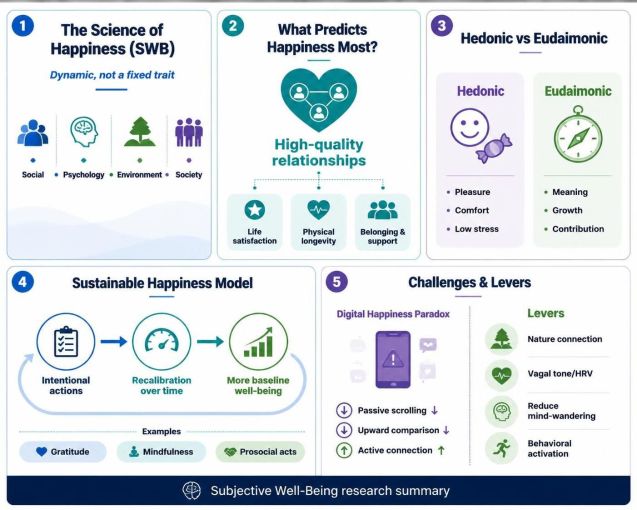
Modern research reveals that happiness, rather than being genetically determined, is influenced by our choices, relationships, and environment. Key components include strong social connections, financial security, and time spent in nature. Strategies like gratitude and mindfulness can enhance well-being, making happiness a dynamic state we can cultivate actively.