-
The Science of Happiness: Key Insights for a Fulfilling Life
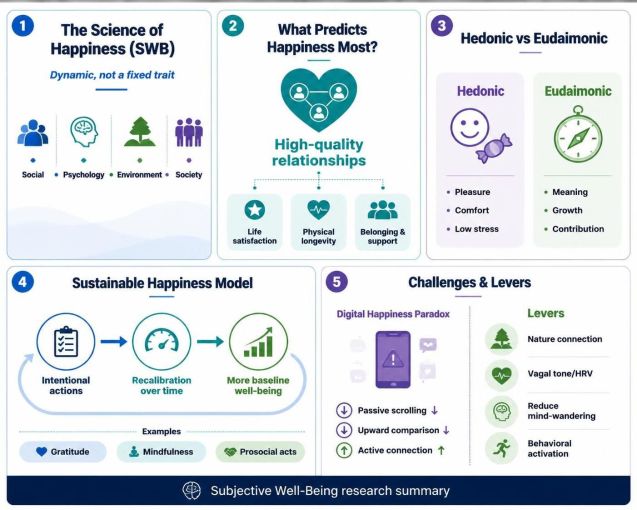
Modern research reveals that happiness, rather than being genetically determined, is influenced by our choices, relationships, and environment. Key components include strong social connections, financial security, and time spent in nature. Strategies like gratitude and mindfulness can enhance well-being, making happiness a dynamic state we can cultivate actively.
-
Self-Determination Theory in Education, Work, and Health

Self-Determination Theory (SDT), highlights three core psychological needs—autonomy, competence, and relatedness—that drive human motivation and performance. Satisfying these needs fosters engagement, creativity, and personal growth across various domains like education, workplace, healthcare, and sports, promoting well-being and sustained motivation.
-
A Step-by-Step Guide to MEANING-MAKING

The journey of creating meaning throughout life unfolds in six chapters, reflecting our evolving perspectives from childhood to later years. Drawing on psychological research, this guide emphasizes the importance of recognizing one’s current life stage and engaging with its unique challenges and questions. Meaning is a continuous, dynamic process rather than a fixed destination.
-
The Essential Reference for Counselling and Psychotherapy Practices
Modern mental health practice integrates empathy, clinical precision, and evidence-based science. Counselling and psychotherapy, though often confused, have distinct differences in depth, duration, and objectives. This reference guide provides essential frameworks for students, educators, and practitioners, detailing theoretical orientations, ethical considerations, and practical applications for effective client care.
-
Don’t try to change the people closest to you!