
-
Healthy vs. Unhealthy Coping: Key Differences Explained

Life is filled with stressors like exams, jobs, and relationships. How one copes greatly affects growth. This guide emphasizes healthy coping strategies, such as problem-focused and emotion-focused coping, while highlighting the dangers of avoidant coping. Building a versatile coping toolkit can promote resilience and emotional management.
-
The Journey of Therapy: Understanding Its True Nature

Therapy is a transformative process marked by self-exploration and healing, often beginning with building trust between client and therapist. The therapeutic dialogue fosters insight and self-awareness, helping clients understand their thoughts and behaviors. Ultimately, therapy equips individuals with skills and resilience for lasting personal growth beyond the sessions.
-
Personal growth training manual

Personal growth is a gradual process requiring intention, patience, and purpose. It involves overcoming biological resistance, fear of uncertainty, and shifting to a growth mindset. Mastery relies on managing thoughts, emotions, and behaviors within the “Growth Zone.” True development requires nurturing cognitive health, ultimately empowering individuals to design their own lives. Here Downloadable resources including…
-
Personal growth training Part – 6
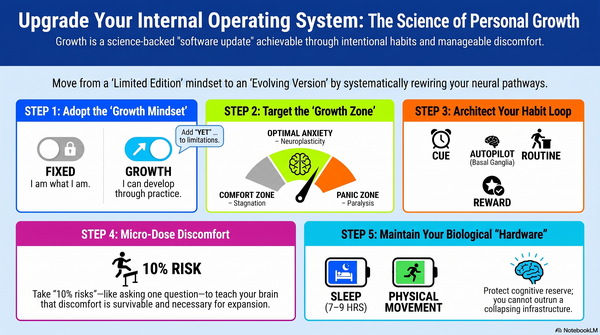
Welcome to the Personal growth training Part – 6. To sustain long-term personal growth, you must treat your body and mind as a high-performance system. This requires shifting from a “fixed” view of your abilities to a strategy of systemic cognitive and physical development. Your “software” (intentional habits) is only as effective as the “hardware”…
-
Personal growth training Part – 5
Welcome to the Personal growth training Part – 5. To sustain growth, you must transition from relying on fleeting motivation to building automated systems within the brain. High-performance habits are “computationally cheap” for the brain because they offload effort from the prefrontal cortex (the expensive executive center) to the basal ganglia (the autopilot system).