
Change is an inevitable part of life, yet people often resist it. Whether it involves adopting a new technology, adjusting to organizational restructuring, changing personal habits, or accepting new ideas, resistance to change is a common psychological phenomenon. Understanding why people resist change can help individuals and organizations manage transitions more effectively.
What Is Resistance to Change?
Resistance to change refers to the tendency of individuals to avoid, reject, or oppose alterations to their established routines, beliefs, or environments. This reaction is not necessarily irrational; rather, it is often rooted in fundamental psychological processes that prioritize stability, predictability, and security.
Why Do People Resist Change?
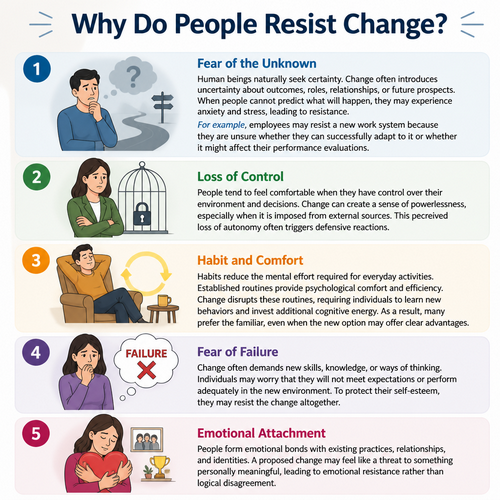
1. Fear of the Unknown
Human beings naturally seek certainty. Change often introduces uncertainty about outcomes, roles, relationships, or future prospects. When people cannot predict what will happen, they may experience anxiety and stress, leading to resistance.
For example, employees may resist a new work system because they are unsure whether they can successfully adapt to it or whether it might affect their performance evaluations.
2. Loss of Control
People tend to feel comfortable when they have control over their environment and decisions. Change can create a sense of powerlessness, especially when it is imposed from external sources. This perceived loss of autonomy often triggers defensive reactions.
3. Habit and Comfort
Habits reduce the mental effort required for everyday activities. Established routines provide psychological comfort and efficiency. Change disrupts these routines, requiring individuals to learn new behaviors and invest additional cognitive energy. As a result, many prefer the familiar, even when the new option may offer clear advantages.
4. Fear of Failure
Change often demands new skills, knowledge, or ways of thinking. Individuals may worry that they will not meet expectations or perform adequately in the new environment. To protect their self-esteem, they may resist the change altogether.
5. Emotional Attachment
People form emotional bonds with existing practices, relationships, and identities. A proposed change may feel like a threat to something personally meaningful, leading to emotional resistance rather than logical disagreement.
Psychological Theories Explaining Resistance
Cognitive Dissonance Theory
According to psychologist Leon Festinger, people experience discomfort when new information conflicts with their existing beliefs or behaviors. To reduce this discomfort, they may reject or resist the change rather than alter their established perspectives.
Status Quo Bias
This concept suggests that individuals tend to prefer the current state of affairs simply because it is familiar. The potential risks associated with change often appear greater than the benefits, even when objective evidence suggests otherwise.
Prospect Theory
Developed by Daniel Kahneman and Amos Tversky, Prospect Theory proposes that people feel losses more intensely than equivalent gains. Consequently, individuals often focus on what they might lose through change rather than what they stand to gain.
Signs of Resistance to Change
Resistance may be expressed in different ways, including:
- Open criticism or opposition
- Delayed action or procrastination
- Reduced participation or engagement
- Increased complaints and negativity
- Avoidance of new procedures or responsibilities
- Passive acceptance without genuine commitment
These behaviors are often manifestations of underlying concerns rather than mere stubbornness.
Overcoming Resistance to Change

Communicate Clearly
Providing accurate information about the reasons, benefits, and expected outcomes of change can reduce uncertainty and build trust.
Encourage Participation
When people are involved in decision-making processes, they are more likely to feel ownership and commitment toward the change.
Provide Support
Training, coaching, and emotional support can help individuals build confidence and competence during transitions.
Address Emotional Concerns
Successful change management requires acknowledging people’s fears, anxieties, and losses rather than focusing solely on logic and facts.
Build a Positive Vision
Helping individuals see how change aligns with their goals and values can transform resistance into motivation.
Conclusion
Resistance to change is a natural psychological response rooted in the human need for security, predictability, and self-preservation. Rather than viewing resistance as an obstacle, it should be understood as valuable feedback about people’s concerns and needs. By addressing the psychological factors behind resistance and fostering trust, participation, and support, individuals and organizations can navigate change more effectively and achieve lasting growth.